
Welcome to the MPowered Training Academy
RAF Brize Norton - Thursday 8th May
Welcome to the MPowered Training Academy. We’re delighted to have you with us and can’t wait to see you soon.
Before the course there’s a few bits of housekeeping, some pre-course reading, and some more information to get you ready to go before the big day. This page will explain how the training day and your assessment will run, and outline what you can expect from us. There’s some reading, learning, and a few forms to complete.
The anatomy and physiology reading should take you a couple of hours (and is printable) so feel free to come back to it when you have some spare time, or print it out and enjoy for some bedtime reading.
On this page you’ll find;
The course legals, policies & procedures
Your Pre-Course Information (including more details about what to bring and what to expect on the day)
Assessment Information
Some forms to complete
Pre-Course Learning of Anatomy & Physiology
When you’re ready, let’s get started!
1. Course Legals, Policies & Procedures
All the important information we’re required to give
-
To provide training and education that enables the learners to develop their knowledge and skills in their work.
-
Our Continuing Professional Development (CPD) training aims to provide learners with up-to-date knowledge and skills training, giving each learner the opportunity to develop their professional skills in their work.
-
Learners will:
• Receive detailed and timely information in relation to the aims, outcomes, content, assessment, resources and timetable of the training
• Receive a Learner’s Resource Pack to augment the training event and contribute to the knowledge and skills of the learner
• Receive feedback in relation to their skills and knowledge as a result of attending the training
• Take part in CIMSPA endorsed CPD training that is designed to contribute to their professional development
• Have an opportunity to comment and evaluate the training programme
• Have an opportunity to identify any specific learning needs and be assured that their learning needs will be accommodated to the best of our ability and resources.
The MPowered Training Academy: Indoor Cyling training and assessment is endorsed by CIMSPA. The training contributes to your professional development and on successful completion of the training and assessment you will be entitled to 10 CPD points.
-
This training and assessment is mapped to the following units of the National Occupational Standards: collect and analyse information: plan safe and effective group exercise, prepare self and equipment for group exercise, prepare participants for group exercise, instruct, group exercise to participants, help participants improve their performance.
-
We, MPTA, are committed to promoting equality of opportunity in providing any and all training and assessments.
To request a copy of our Equal Opportunities Policy, please contact us.
We are committed to ensuring that all staff, tutors and learners:
• Actively promote equality of opportunity for all persons.
• Prevent unlawful occurrences of direct discrimination, indirect discrimination, harassment, and victimisation.
• Fulfil the legal obligations under the equality legislation and associated Codes of Practice.
• Promote a harmonious working and training environment where all people are treated with respect and helped to achieve their full potential.
• Take positive action, where necessary, to adhere to our Equal Opportunities Policy.
-
All assessment learners are assessed by suitably trained assessors, and are assessed against our published assessment criteria.
In the unlikely event that a learner wishes to appeal against their assessment decision, they may appeal in writing.
Details of grounds for appeal and the procedure to apply are available in your administration pack, for an additional copy of the procedures, please contact us.
-
We are committed to providing access and individual learning support to learners whenever possible.
If you have an individual learning need or condition that would make it difficult for you to meet all or some of the assessment criteria, please inform us by contacting us as soon as possible to enable us to make any arrangements or adjustments to make any necessary provisions for you to access the assessment.
We offer a range of support and guidance to learners who have declared a particular learning need that is supported by a statement of learning need. We also endeavour to offer advice and guidance for learners with a declared learning need.
Details of our additional support procedure for learners available by contacting us.
-
We aim to ensure that learners are given clear, accurate and timely information pertaining to our training and assessment. We expect tutors and staff to provide excellent quality training and assessment at all times. Any learner who believes that they have not been treated fairly or have not received appropriate customer care, may raise their concerns.
Details of our Complaint Procedure are available contacting us.
-
We aim to ensure that learners receive a consistently high quality of training from each and every member of our training team.
To ensure a consistently high standard of training and assessment across the range of training offered, we will ensure that we will maintain a quality provision (as specified within the professional register’s Code of Practice).
Our Quality Assurance Policy is available by contacting us.
2. Pre-Course Instructions
Where to go and what to bring
Title of Training: MPowered Indoor Cycling Certification
Venue: RAF Brize Norton
Start Time: 10am
Finish Time: 4pm
To Bring: Gym kit, pens, a notepad, plenty of snacks, and a water bottle. It’s essential to stay hydrated and keep energy levels up throughout the day. (It would also be very helpful to have cycling shoes with SPD cleats if you have them).
As a learner, you are required to:
Attend the training on the times stated above
Read the Learner’s Pack to familiarise yourself with the training (and assessment) requirements
Complete the pre-course tasks/pack
Complete any home-study tasks as requested by the tutor
Bring appropriate clothing
3. Assessment Information
WHAT TO EXPECT FROM YOUR ASSESSMENT
To achieve the certification and adhere to CIMSPA criteria, you are required to show your level of competence in a two part assessment after your training.
What are the assessments?
Part one is a multiple choice quiz, completed online, which covers the basics of Indoor Cycling and the Anatomy & Physiology Pre-Course Learning (below). Part two is a practical assessment in which you film yourself teaching a choreography track. This sounds scary right now, but please don’t panic. By the end of your day with Melissa you’ll know exactly what this entails, and you’ll also be provided with all the information you need as to how to film and send it (it’s dead easy, don’t worry!). We don’t give you that information now because, until you’ve had the training, most of the instructions won’t mean anything to you.
When are the assessments?
Both parts of the assessment take place after your day on the course. You’ll be sent all the information and links you need shortly after your training day. There’s no fixed deadline for you to submit them, you can do them in your own time, just please keep in mind we cannot issue your certificate to officially certify you until you have completed both assessments. Your practical assessment will be reviewed within one week of us receiving it.
What if I don’t pass my assessment?
If you do not achieve some or all of the assessment criteria and receive a ‘referral’ assessment decision, you will be given feedback and an action plan to enable you to prepare to re-take the assessment. The tutor and/or assessor will provide you with support and guidance towards being re-assessed in the areas required to achieve your certificate. There is a reassessment fee of £30.
4. The paperwork
A few forms for you to complete
5. Anatomy & Physiology
Pre-Course Learning
Welcome to your Anatomy and Physiology module. This course is designed to make you the best Indoor Cycling Instructor possible and in order to be a brilliant instructor we need to acquire as much knowledge as possible, not just about cycling. We’re going to be looking at anatomy and physiology in relation to exercise and exploring the effects that Indoor Cycling has on the body.
This section will enable you to answer most questions your riders will have and make you a much more confident coach. You’ll also probably be able to help any young relatives with their biology homework.
Here’s what this module will help you achieve:
You’ll understand the effects of exercise on the bones and muscles. You’ll learn the functions of the respiratory, circulatory, nervous, and energy systems, and you’ll understand the principles of training.
THE BONES AND THE SKELETON
Exercise affects the skeleton in two different ways:
SHORT TERM - The muscles pull on the bones. The bones receive more nutrients and an increased blood supply.
LONG TERM - Bones get stronger and have an increased density. Posture is improved and there is a reduced risk of osteoporosis. This is why we should encourage older generations to carry on exercising. Indoor cycling is a low impact exercise that can be enjoyed by anyone of any age (as long as they can reach the pedals!).
A handy acronym for remembering the main functions of the skeleton is APPLSS, although admittedly that’s total nonsense.
ATTACHMENT – Different tissues attach to the skeleton, such as tendons and ligaments.
PROTECTION – The bones are incredibly important for protecting the body’s organs. The skull, ribcage, sternum, vertebral column and pelvic girdle keep our organs safe.
PRODUCTION – Some bones use their bone marrow to produce red blood cells (which carry oxygen), white blood cells (which fight bacteria and infection) and platelets.
SHAPE – The bones give the body its basic shape. The three main body types you’ll see are:
Ectomorph – a tall lean body shape with longer bones
Endomorph – a shorter frame with shorter bones that’s slightly more rounded
Mesomorph – sometimes referred to as an athletic frame, broader shoulders, larger bone structure and rectangular body.
STORAGE – Minerals and fats are stored in the bones, which assist bone growth and development.
LOCOMOTION – Movement at a joint happens because the longer bones act as levers for the muscles to pull on.
Cycling relies predominantly on the bones and muscles in the legs. The hips and feet also get involved quite a bit.
So here are the main ones that help to move the pedals round.
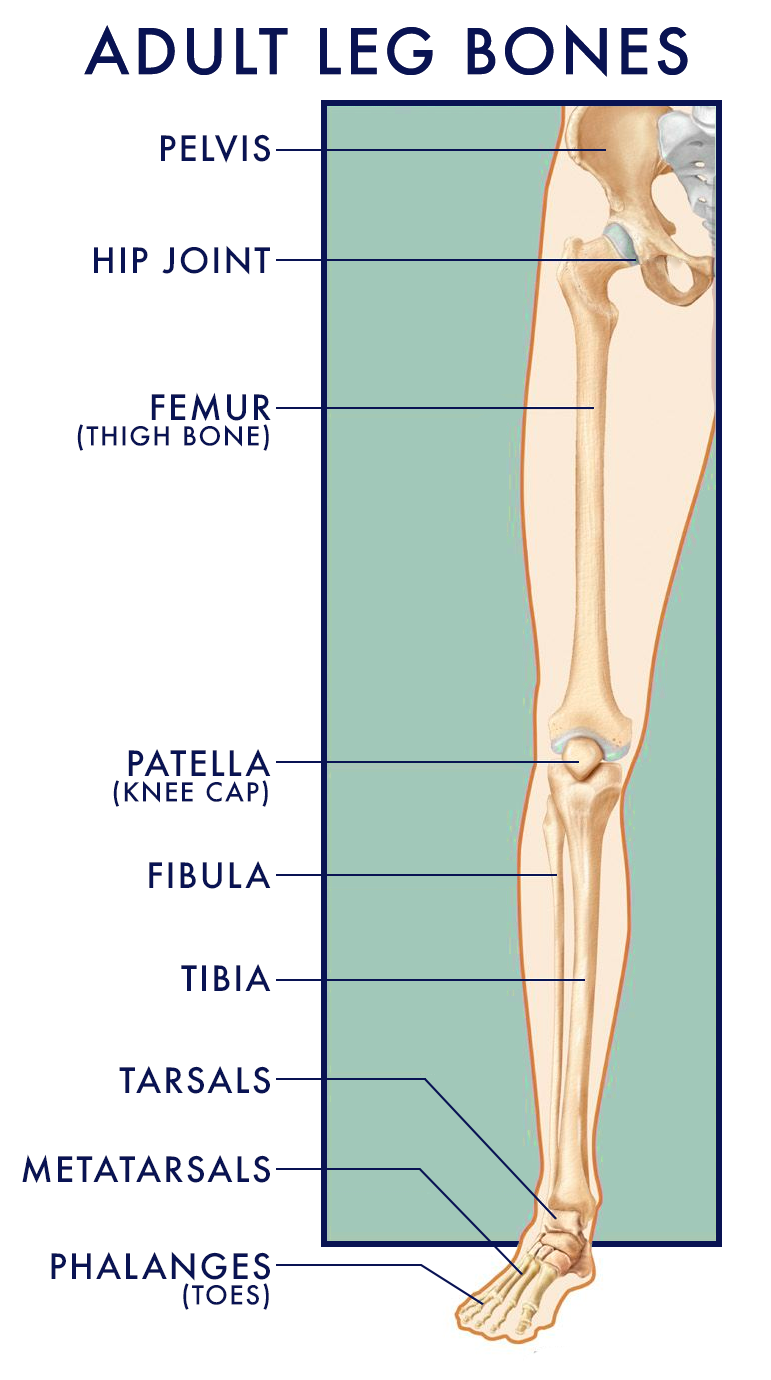
PELVIS: Consists of the Ilium, Ischium and Pubis.
HIP JOINT: One of the most important joints. It bears the force of the leg muscles and the weight of the entire body. A flexible joint, it allows for a great range of motion
FEMUR: The thigh bone. It forms the knee joint with the tibia. It’s the longest bone in the body.
PATELLA: The kneecap. It’s covered by the tendons of the quadriceps muscles.
FIBULA: This is the smaller bone of the lower leg. It lies on the outside of the tibia. (It’s what footballers often break.)
TIBIA: The bigger, thicker bone of the lower leg.
TARSALS: Make up the ankle joint (7 separate bones).
METATARSAL: The five long bones in the middle of the foot. Another common footballing injury.
PHALANGES: The toes! Each toe has three phalangeal bones and the big toes have two each.
MUSCLES
Ghe human body is made up of over 600 muscles? These muscles, which make up 40% of our body weight, work together to help us move. When it comes to cycling, the muscles we use the most are skeletal muscles, which are voluntary and controlled by our nervous system. There are also two other types of muscle tissue. Let’s have a look at all three:
SMOOTH MUSCLE: (Involuntary) – e.g. the digestive system.
CARDIAC MUSCLE (Involuntary) – e.g. the heart.
SKELETAL MUSCLE (Voluntary) – e.g. the quads and hamstrings.
The muscles used to cycle that we will look at in this section are Skeletal Muscles.
They are voluntary (controlled by the nervous system).
When they are stimulated they pull on the bones to create movement.
They are attached to the bones via tendons.
The muscle is made up of lots of muscle fibres.
THE TWO MAIN TYPES OF SKELETAL MUSCLE FIBRES
Slow twitch: Resistant to fatigue, produce less force and used for lower intensity aerobic work and endurance based activity. E.g. Triathlon.
Fast twitch: Less resistant to fatigue, produce more force and used for intense movements. E.g. Sprint.
These are the main muscles used in cycling.
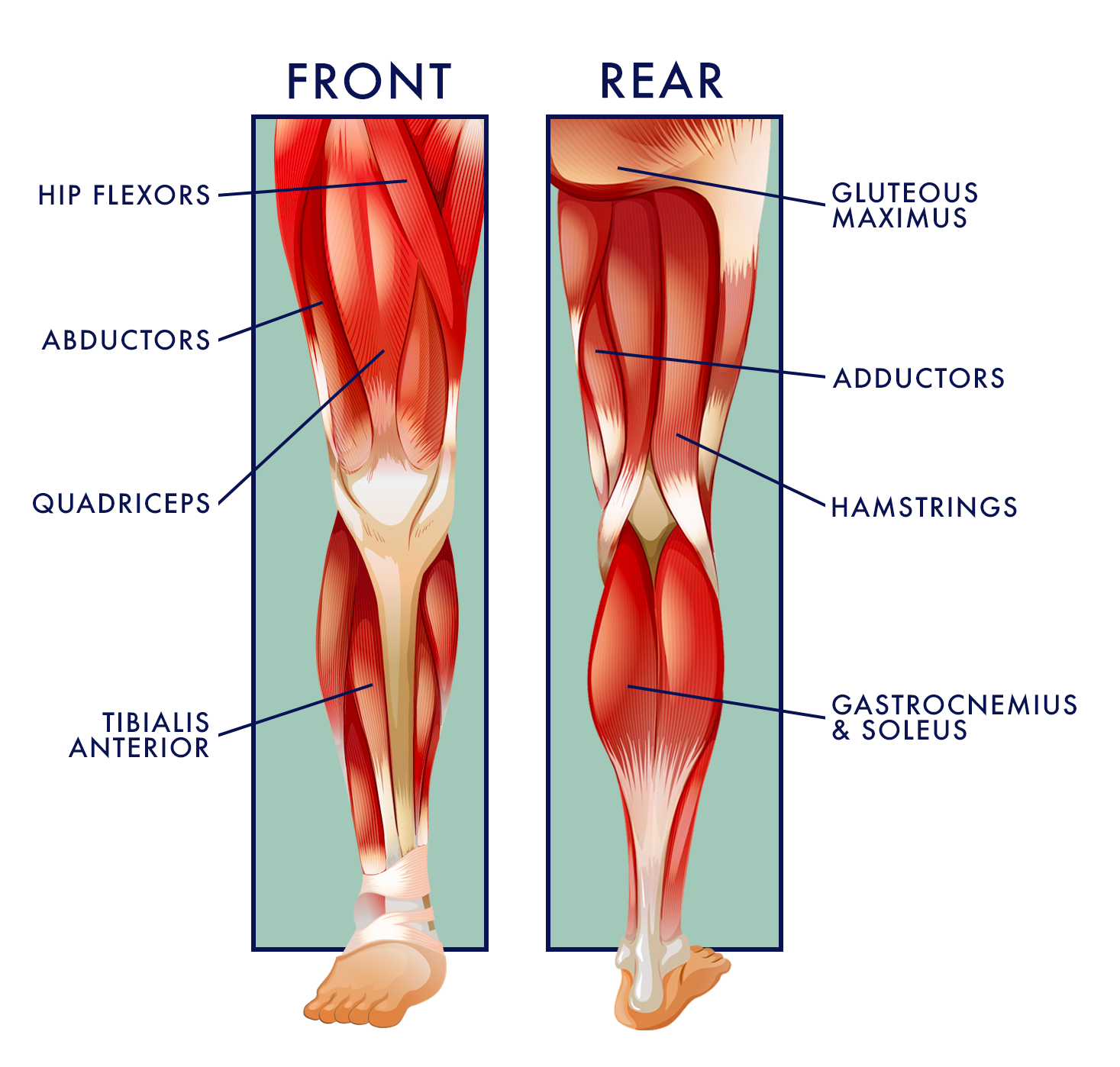
HIP FLEXORS: Found through the pelvis and onto the femur.
GLUTEOUS MAXIMUS: Buttocks.
ABDUCTORS: Outside of the top thigh.
ADDUCTORS: Inner Thigh.
QUADRICEPS: Front of the upper leg.
HAMSTRINGS: Back of the upper leg.
GASTROCNEMIUS AND SOLEUS: Calf.
TIBIALIS ANTERIOR: Front of the lower leg.
THE RESPIRATORY SYSTEM
Take a deep breath, we’re about to talk about the respiratory system. This system is responsible for taking in oxygen and getting rid of carbon dioxide in your body. It consists of the lungs, diaphragm and intercostal muscles. Let's take a closer look at how it works.
The lungs are found on either side of the ribcage in the thorax. The muscle at the bottom of the ribcage is the diaphragm.
The heart is positioned between the lungs (slightly to the left).
The lungs take in oxygen when we breathe and remove carbon dioxide.
The diaphragm is the main muscle used to help the lungs.
During an ‘inhale’ the diaphragm contacts, causing a vacuum effect so air is sucked into the lungs.
On an ‘exhale’ the diaphragm relaxes, which forces air out of the lungs.
DIFFERENT BREATHING PATTERNS:
Coastal Breathing: also known as shallow breathing. Mainly done through the chest.
Diaphragmatic Breathing: also known as deep breathing, used frequently in yoga.
Lateral and Thoracic Breathing: this is where the sides and back of the ribcage expand during breathing, which maximises use of the lower lungs. Frequently used in Pilates.
THE CIRCULATORY SYSTEM
Think of this as the transport system of the body. The heart, blood and blood vessels work together to deliver oxygen and nutrients all around the body and remove waste products from the body.
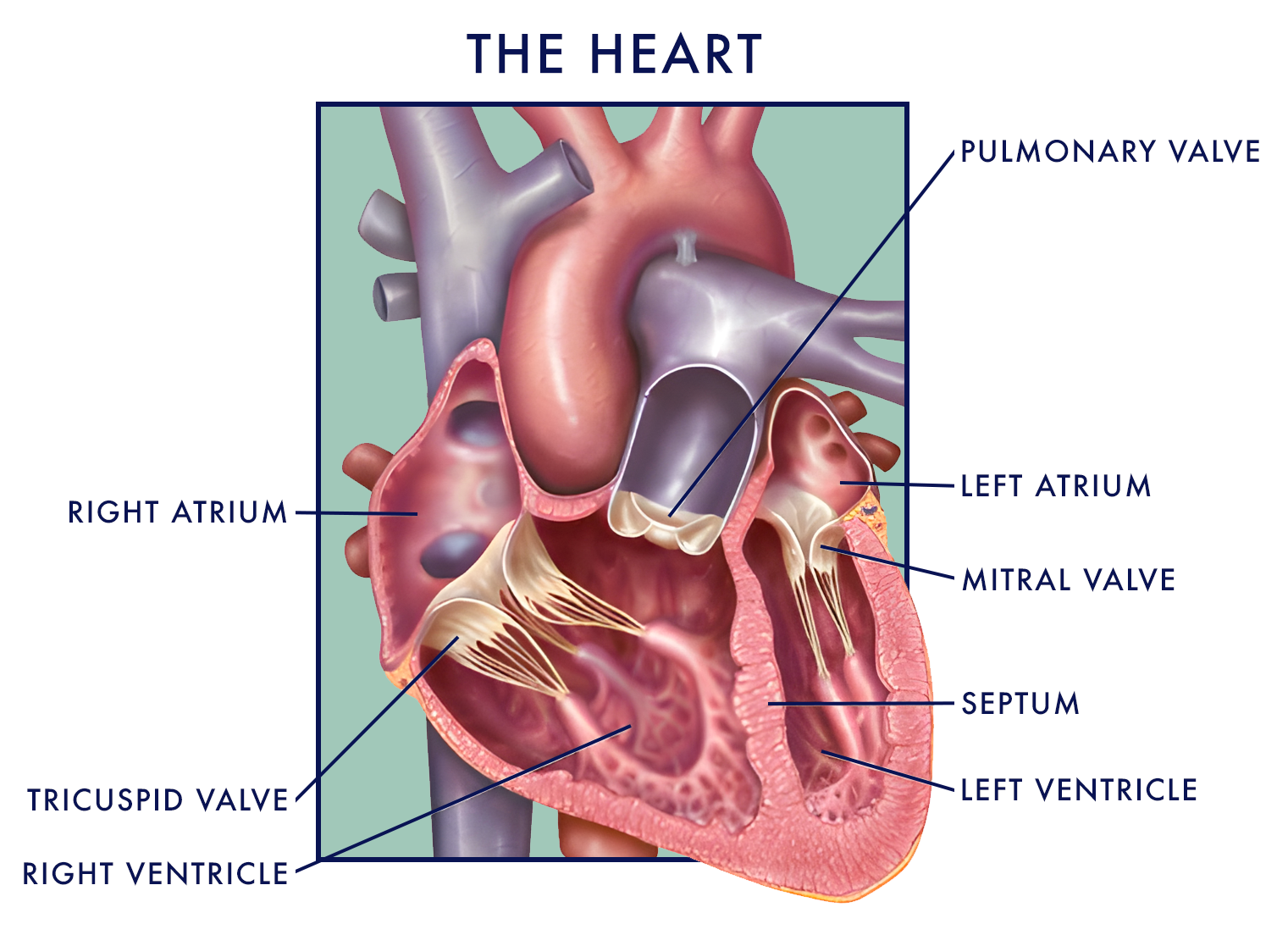
THE HEART:
A big muscle (myocardium) that pushes oxygen around the body
The right side of the heart receives blood from the body and pumps blood to the lungs
The left side of the heart receives blood from the lungs and pumps blood to the body.
BLOOD VESSELS
Think of these like motorways around the body. They constantly carry blood from the heart to the rest of the body and back again.
Blood is like cars on the motorways. It carries nutrients and oxygen all around the body and removes waste products. The main components of blood are red blood cells, white blood cells, platelets and plasma.
BLOOD PRESSURE
As the blood moves, it pushes against the sides of the blood vessels. The strength of this pushing is your blood pressure.
It’s measured in millimetres of mercury and shown as one number (systolic) over another number (diastolic).
Optimum blood pressure is 120/80
Systolic BP is the highest level your blood pressure reaches when your heart beats as it increases the pressure within the arteries
Diastolic BP is the lowest level your blood pressure reaches as your heart relaxes between beats.
Readings higher than 120/80 can pose an increased cardiovascular risk. If a blood pressure reading is over 180/110 you should refer the client or Rider to their GP.
ENERGY SYSTEMS
Everything that the body does requires energy. To get energy the human body uses something called ATP (Adenosine Triphosphate). There isn’t a great deal of ATP in the muscles so when it’s used up it has to be reproduced. There are three ways of producing ATP.
CREATINE PHOSPHATE: Chemical energy. Doesn’t require oxygen, fat or carbohydrate. This production method is instant but only lasts a maximum of ten seconds. Very useful for a 100 metre sprint, a high jump, or overtaking someone on a bike. (CP AND ATP stores are 50% restored after 30 seconds and fully restored about five minutes of rest.)
ANAEROBIC SYSTEM: Uses stored glycogen (carbohydrate), which is broken down by an enzyme to produce ATP without oxygen. The waste product of this system is lactic acid, which makes the muscles burn. Used for activities which require high intensity for around two minutes before the energy is depleted and the aerobic system takes over. E.g. Cycling for a mile at around 20 miles an hour.
AEROBIC SYSTEM: This is the only system that uses oxygen for ATP production. The aerobic system breaks down carbohydrate, fat and protein in the presence of oxygen. It depends on the strength and efficiency of the heart as it will work as long as oxygen is supplied. The waste products it produces are carbon dioxide, water and heat, which are removed easily by from the body. This system is used for long periods of energy production, such as a marathon.
THE NERVOUS SYSTEM
The nervous system is the ultimate boss of the human body. Its main job is to gather information, interpret it and then respond to the action needed. It consists of two systems
The central nervous system (CNS) – the brain and spinal cord.
The peripheral nervous system – nerve cells that carry information to or from the CNS.
The Central Nervous system
This is the main control centre. The brain is the interpreter of the external environment and the origin of control over body movement. Like a central computer, it interprets information from our eyes (sight), ears (sound), nose (smell), tongue (taste) and skin (touch), as well as from internal organs, such as the stomach. The spinal cord is the highway for communication between the body and the brain.
The Peripheral nervous system
This can be divided into the:
Somatic System: Controls voluntary movement: e.g. pushing down on the pedals of a bike.
Autonomic System: Controls involuntary functions: e.g. digestion.
How does this affect muscle movement?
The nervous system is in charge of the muscular system.
For example, to push down the pedal of a bike the eyes gather information (where the pedal is, in what direction it needs to be pushed, etc.), this information is sent to the CNS, the brain then responds by sending a message back with information about which muscles to contract and how many motor units (a single motor neuron and the muscle fibres it activates) are needed. The muscles can then pull on the bones and create the right type and force of movement.
PRINCIPLES OF FITNESS
People come to Indoor Cycling classes for many reasons but most commonly because they want to get fitter (e.g. improve their cardiovascular health), stronger and perhaps lose some weight. In order to understand how as instructors we can help them to do that, it’s important to understand the Principles of Fitness.
SPECIFICITY: The type of training that you do should be specific to your sport. You should train the energy system, which you use predominantly (i.e. don't cycle 30 miles in training if you're a sprinter!) and the fitness and skill components most important to your sport, e.g. agility, balance or muscular endurance.
PROGRESSIONAL: Beginners need to start gradually and then increase the amount and type of exercise they do by overloading.
OVERLOAD: In order to progress and improve our fitness we have to put our bodies under additional stress. Doing this will cause long-term adaptations, enabling our bodies to work more efficiently to cope with this higher level of performance. You’ll see the same people in your classes every week. It’s really important that you encourage them to add on a little bit more resistance, or be aware that you may need to push people to cycle at a faster pace or to sprint for longer periods. As a teacher you’re responsible for helping your clients work harder and harder so they don’t plateau.
Overloading can be achieved by following the acronym FITT:
Frequency: Increasing the number of times you train per week
Intensity: Increasing the difficulty of the exercise you do. For example, cycling at 18 km/h instead of 14, or adding on more resistance for hill climbs.
Time: Increasing the length of time that you are training for each session. You may want to increase track length if you’re working with regulars. For example, you could include a standing climb that lasts four minutes, rather than three.
Type: Increase the difficulty of the training you’re doing. For example, progress from working at 72RPM to 85RPM.
REVERSIBILITY: USE IT OR LOSE IT! Any improvement that takes place as a result of training will be reversed when you stop training. If you take a break or don’t train often enough you will lose the fitness you gained.
What’s Next…
If you’ve read and completed everything above, then that’s it for now. Next from us, you’ll receive your Learner Handbook a few days before the course so keep an eye out for it in your inbox.